Sensitive Paws: Prevention and Paw Care for Happy Adventures
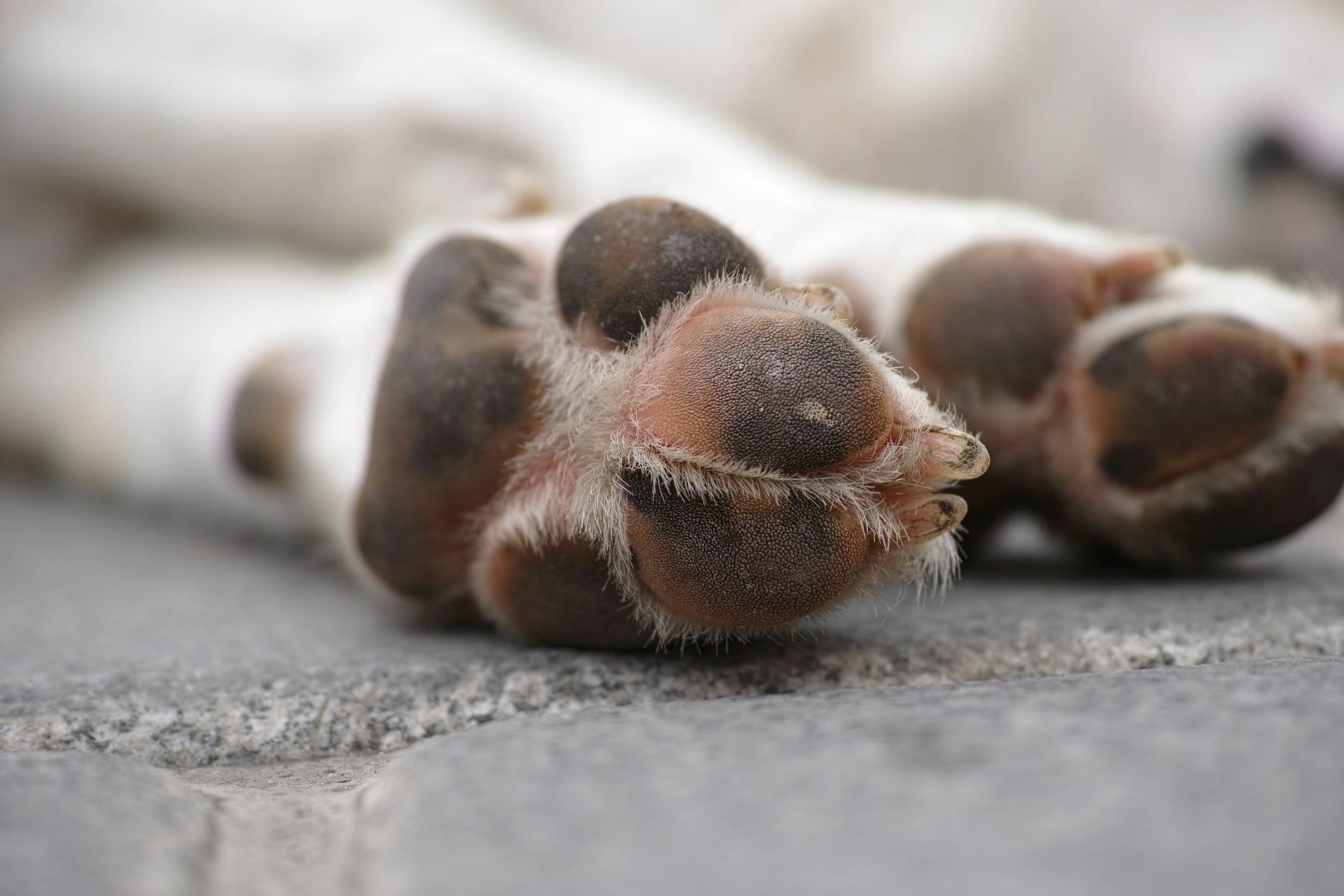
Those adorable paws

Smelly little feet
Disclaimer: While the information provided here is based on general care practices, it’s crucial to consult with a veterinarian for advice tailored to your dog’s specific needs.
Your dog’s paws are their gateway to adventures, and keeping them healthy is essential for overall well-being. Whether your dog enjoys indoor lounging or outdoor exploration, proper paw care supports comfort, mobility, and safety. In this guide, we cover preventive measures, common injuries, and home care steps to ensure your dog’s paws are adventure-ready.
Preventive Measures: Toughening Up Those Paws
Introducing your dog to a variety of surfaces is key to building paw resilience. Gradual exposure helps prevent injuries and ensures a more enjoyable outdoor experience.
Gradual Surface Exposure
Start with dirt, gravel, woodchips, water, and other textures.
Slowly increase time spent on new surfaces to build paw tolerance.
Regular exposure prepares your dog for adventures while reducing discomfort and injury risk.
Common Injuries and Home Treatment
Paw injuries can occur from overuse, friction, or heat. Recognizing and treating issues like blisters, abrasions, or cuts promptly promotes faster healing.
Cleaning the Wound
Rinse the wound with water to remove debris.
Use an antiseptic cleanser such as Hibiclens.
Apply a pain-relieving ointment (e.g., lidocaine) to reduce discomfort.
Wrapping the Wound
Dry the paw thoroughly after cleaning.
Apply Hibiclens for 30 seconds, followed by lidocaine.
Place a sterile gauze pad over the wound; consider adding Neosporin.
Secure with athletic tape or Nexcare, ensuring circulation is not restricted.
Wrap the ankle carefully if needed.
Optional: spray the bandage with bitter spray to deter chewing.
Change the bandage 2–3 times per day if possible.
Tips for Effective Paw Care
Avoid alcohol-based solutions, which can cause pain and hinder healing.
Check bandages regularly to ensure proper fit and circulation.
Consult a veterinarian for guidance specific to your dog’s needs.
Conclusion: Healthy Paws, Happy Adventures
Healthy paws are essential for a lifetime of safe, joyful adventures. For a visual tutorial on paw care, visit the Wild Pup Adventures YouTube channel. Follow Wild Pup Adventures on Instagram, YouTube, and Facebook for tips, tricks, and more guidance on keeping your furry friends adventure-ready.
Your dog deserves the best — let’s make sure their paws are ready for the next exciting journey!